Medical Device Marketing: The Complete Strategy Guide
What Is Medical Device Marketing?
Medical device marketing is the process of informing, influencing, and persuading healthcare decision-makers such as clinicians, hospital procurement teams, and administrators to adopt and use a medical device. Unlike traditional consumer marketing, it involves strict regulatory compliance, strong clinical evidence, and strategies tailored to multiple stakeholders.There are three primary audiences in medical device marketing:
- Clinicians, who require solid clinical data and proof of effectiveness.
- Procurement teams and hospital administrators, who focus on cost-effectiveness and economic value.
- Patients, who are becoming increasingly influential in treatment and device selection decisions.
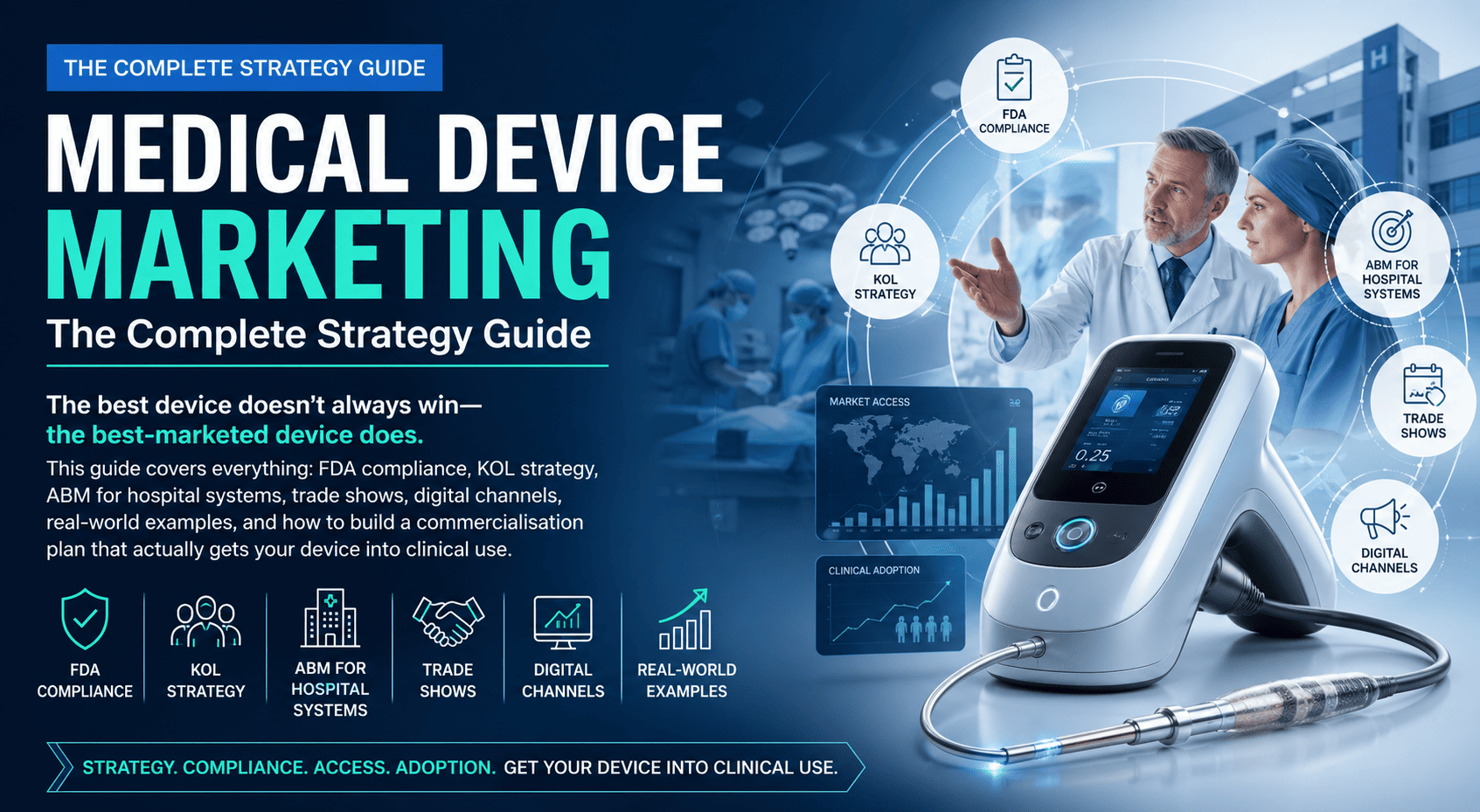
Successful medical device marketing often relies on strategies such as evidence-driven content, engagement with Key Opinion Leaders (KOLs), Account-Based Marketing (ABM) for healthcare systems, participation in trade shows, LinkedIn networking, and partnerships with distributors or Group Purchasing Organizations (GPOs). Commercialisation budgets commonly range from $500,000 to more than $5 million, while hospital sales cycles typically last between 6 and 18 months.
The most important principle is ensuring FDA clearance first, followed by compliant marketing claims before any promotional efforts begin.
Developing an innovative medical device is challenging, but marketing it effectively can be even more difficult. Solving a genuine clinical problem and having strong supporting data does not automatically guarantee market success. In reality, the devices that succeed are often those supported by the strongest marketing strategies.
Medical device marketing differs significantly from other industries. It is not about simple social media campaigns or consumer advertising. Instead, companies must navigate FDA regulations, lengthy hospital procurement processes, and decision-making structures involving surgeons, administrators, financial officers, and sometimes even patient advocacy groups. Many of the core principles used in healthcare marketing still apply, but the added clinical and regulatory requirements make medical device marketing far more complex and specialised.


Comments
Post a Comment